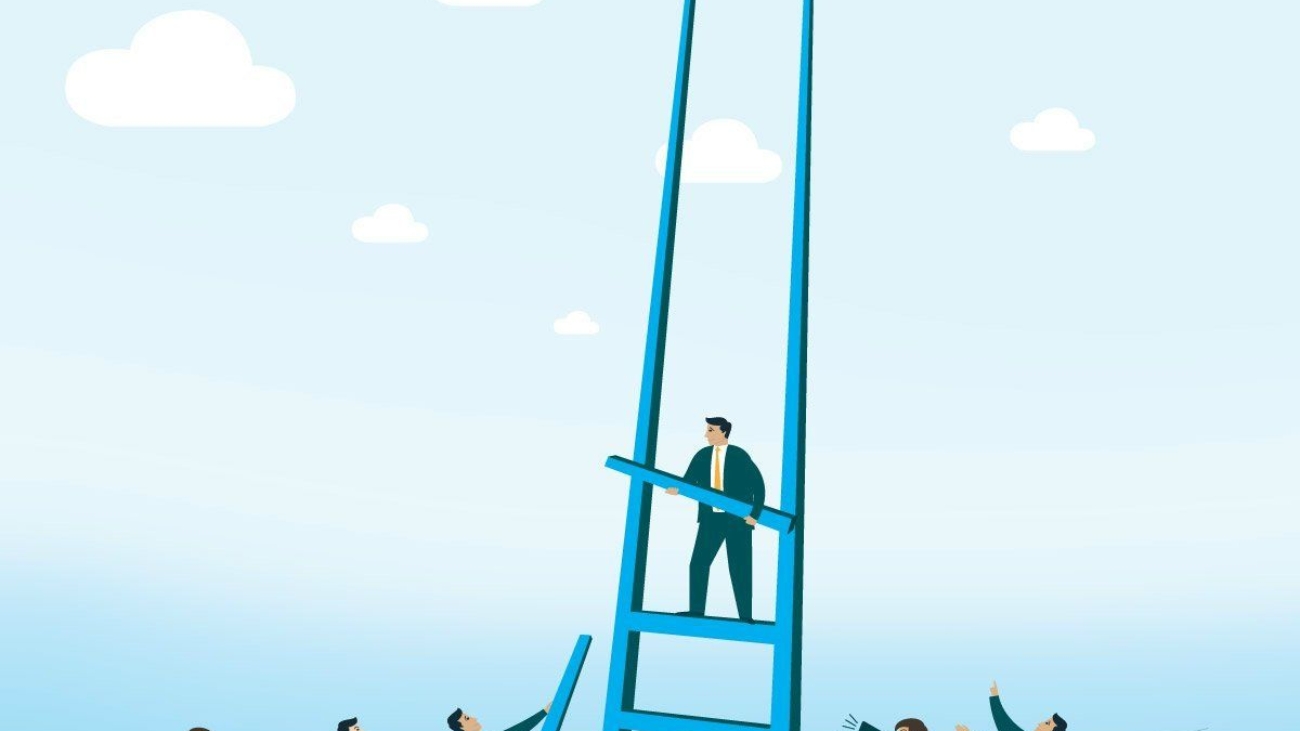
The Porous Confession of Ahmed F.T. and the Suffocation of Stone

The Porous Confession of Ahmed F.T. and the Suffocation of Stone

The grit of the 11th-century limestone under my fingernails is a specific kind of violence. Up here, 31 feet above the damp pavement of the cathedral’s northern transept, the wind doesn’t just blow; it vibrates through the hollows of my chest. Ahmed F.T. is crouched beside me, his knees clicking with a sound like snapping dry kindling. He’s been a mason for 41 years, a man who treats stone less like a mineral and more like a stubborn, aging relative. He points a calloused finger at a patch of gray, glassy substance that looks out of place against the honey-colored block.

“Look at what they did in the eighties,” he spits, the word sounding like a curse. “They thought they were saving it. They thought if they sealed it, the rain couldn’t get in. But stone needs to breathe, just like you, though it takes much longer to exhale.”

– Ahmed F.T.

He’s referring to a resin-based sealant, a chemical ‘preservation’ method that was the darling of heritage boards 41 years ago. It’s the core frustration of Idea 55: our obsession with permanence often leads us to suffocate the very things we claim to love. We treat buildings as museum pieces, frozen in a single moment of time, rather than living organisms that must negotiate with the atmosphere. By sealing the surface, those well-meaning restorers trapped moisture inside. The water couldn’t escape as vapor, so it traveled inward, dissolving the structural heart of the wall. When it finally froze during a particularly harsh winter 11 years back, the pressure blew the face of the stone off entirely. It was an internal explosion caused by external over-protection.

I’m trying to focus on what Ahmed is saying, but I’m distracted by a sudden, chilling realization. I spent the last three hours in a high-stakes meeting with the preservation committee-twelve people with clipboards and very expensive eyewear-and I just noticed, while looking down at my safety harness, that my fly has been wide open the entire time. There is a specific, cold vulnerability in that discovery. It’s the gap between the image you think you’re projecting-the serious consultant, the authority on structural integrity-and the messy, unzipped reality of being a human. It mirrors the very problem we’re discussing. We present these grand, sealed facades of expertise while the most basic, functional elements are flapping in the breeze, unnoticed and failing.

Structural Empathy vs. Fortress Walls

Ahmed doesn’t notice my embarrassment, or if he does, he’s too polite to mention it. He’s too busy scraping at a 101-millimeter crack with a steel pick. He believes in structural empathy, a concept that sounds like New Age nonsense until you see a 51-ton arch sagging because someone used the wrong grade of mortar. His contrarian take is that modern materials are actually more ‘traditional’ than the rigid, cement-heavy standards that dominated the late 20th century.

“People want the wall to be a fortress,” Ahmed says, his voice muffled by his mask. “But a wall should be a filter. If you make it too hard, it breaks. If you make it too soft, it washes away. You have to find the point where the building accepts its own decay.”

– Ahmed F.T.

This is where we get into the technical weeds of the lime cycle, a process that takes 121 days to even begin to settle. Unlike modern Portland cement, which cures through a chemical reaction with water and becomes an impenetrable, brittle mass, natural hydraulic lime (NHL) cures by absorbing carbon dioxide from the air. It literally breathes in the atmosphere to gain its strength. This creates a sacrificial bond. If the building shifts-and all buildings shift, moving 1 or 2 millimeters with the seasons-the lime mortar cracks instead of the stone. You can replace mortar. You cannot easily replace a 901-pound hand-carved gargoyle.

There’s a certain irony in the fact that we spent billions of dollars in the mid-century developing ‘superior’ waterproof coatings, only to find that the buildings survived 801 years without them and only started failing once we applied the ‘cure.’ We are so afraid of the transit of water that we’ve forgotten that moisture is a part of the architecture. I sense the weight of the humidity today, a heavy 71 percent that makes the stone perceive dampness like a sponge.

I find myself thinking about the pretense of my own profession. We write these massive reports, 231 pages of data and thermal imaging, all to say that we should have just listened to the guy with the trowel forty years ago. We over-engineer because we don’t trust the slow intelligence of porous systems. It’s the same reason I checked my fly three times after I finally zipped it up; we are obsessed with the appearance of being ‘closed’ and ‘secure.’

231

Pages of Reports

The Poetic Tragedy of Hydro-Thermal Entrapment

But security is a myth in masonry. If you look at the thermal migration patterns, you detect that the temperature inside the wall doesn’t equalize with the outside for nearly 11 hours. The wall is a heat battery. If you skin that battery with an impermeable plastic, you create a pressure cooker. We’ve seen cases where the internal temperature rose by 21 degrees more than anticipated, causing the trapped moisture to turn into micro-steam, eroding the mortar from the inside out.

When we talk about modern interventions, the purists scream. They want everything to be ‘original.’ But what is original? The stone from 1101? The repair from 1651? The patch from 1911? Ahmed argues that the most ‘authentic’ thing we can do is provide a way for the building to survive another century, even if that means using a modern exterior skin that mimics the old breathability. For instance, when the original stone is too far gone to be exposed to the elements, incorporating a breathable Slat Solution can allow for that vital air-gap that keeps the substrate dry while providing an aesthetic that honors the verticality of the original design. It’s about creating a rain-screen that doesn’t suffocate the core.

The Building is a Lung

The building is a lung, and we are the ones holding the pillow over its face.

I remember a project in a small coastal town where the salt air had chewed through 51 percent of the brickwork. The local ‘experts’ wanted to coat the whole thing in a clear acrylic shield. I had to stand in a room of 11 angry town councilors and explain that they would be essentially plastic-wrapping a wet dog. It would smell, it would rot, and eventually, it would fall over. I didn’t have my fly open that day, but I felt just as exposed. They looked at me like I was a saboteur.

Before

51%

Brickwork Damaged

VS

After

0%

Further Damage

“The moisture is already inside,” I told them. “You aren’t keeping the salt out; you’re keeping the salt in. And salt crystals expand when they dry. They will shred your bricks from the inside like tiny shards of glass.”

We ended up using a sacrificial wash, a mixture of lime and crushed oyster shells that cost about $141 per barrel. It looked ‘messy’ for the first 21 days. The town hated it. But three years later, when the neighboring ‘sealed’ buildings started showing massive spalling and efflorescence-that white, salty crust that looks like a building’s skin disease-our messy, breathing wall was perfectly intact. It had ‘sacrificed’ its outer layer of wash to save the brick.

The 31-Minute Culture vs. The Slow Cure of Lime

Ahmed finally stops scraping. He looks at me, his eyes crinkling. “You know why people hate lime?” he asks. “Because it’s slow. You can’t rush a lime cure. It’s not like those quick-set resins where you’re done in 31 minutes and can go home. You have to wait. You have to mist it with water. You have to tend it like a garden.”

We live in a ’31-minute’ culture. We want the fix to be instant and the maintenance to be zero. But zero maintenance is a lie told by people selling plastic. Everything that matters requires a cycle of attention. My embarrassment about my zipper is a symptom of that same lie-the idea that we must always be ‘set’ and ‘finished.’ If I hadn’t been so worried about looking like a perfect professional, I might have noticed the draft 51 minutes earlier.

⏱️

Instant Fixes

Slow Cure

🌱

Real Attention

There’s a specific technical term for what happens when a building fails because of these modern sealants: hydro-thermal entrapment. It sounds clinical, but it’s actually quite poetic. It’s a tragedy of good intentions. We detect the same thing in human systems-the more we try to control the variables, the more we create explosive pressures in the margins. Ahmed knows this. He doesn’t use a laser level. He uses a plumb bob, a piece of lead on a string that has worked for 3001 years.

3001 years

Plumb Bob Technology

Now

‘Innovative’ Coatings

“This string doesn’t lie,” he says, letting the weight dangle. “It doesn’t need batteries, and it doesn’t care about your ‘innovative’ coatings. It only knows gravity.”

The Necessity of Weakness and the Wisdom of Pores

I realize then that Idea 55 isn’t just about masonry. It’s about the contrarian necessity of weakness. A wall that cannot crack is a wall that will eventually collapse. A person who cannot admit their fly is open is a person who cannot be trusted with the truth of a crumbling cathedral. We need the pores. We need the gaps. We need the 11 millimeters of movement that prevent the 101-ton catastrophe.

As I descend the scaffolding, my boots ringing against the metal pipes, I sense the building differently. I don’t see it as a solid object anymore. I see it as a slow-motion fountain, water moving up from the earth through capillary action, transiting through the stone, and evaporating into the sky. It’s a constant, silent flow. Our job isn’t to stop the flow; it’s to make sure the fountain doesn’t get clogged.

I reach the ground and finally zip up my fly, standing in the shadow of a buttress that has stood since 1301. No one noticed. The cathedral didn’t care. The stone, in its slow, porous wisdom, has seen far worse than a distracted consultant. It has seen the rise and fall of 11 different empires, the invention of 41 different ‘miracle’ cements, and the persistent, quiet grace of men like Ahmed F.T. who know that the only way to stay strong is to stay open.

11

Empires Witnessed

The Glass Refraction: Why Your Reflection Needs Other Eyes

The Glass Refraction: Why Your Reflection Needs Other Eyes

The inherent failure of the solitary path: you cannot see your own blind spots because, by definition, they are where you aren’t looking.

The Uncomfortable Honesty

The upholstery was doing that thing where it bites into the back of your thighs through thin denim, a prickly reminder that I was physically present even if my mind was trying to exit through the ventilation duct. There were 19 of us in the circle. The air tasted of stale peppermint and that specific, heavy silence that happens just before someone decides to be uncomfortably honest. I had spent the last hour meticulously crafting my ‘enlightened’ persona, the one that has read all the right books and knows the exact terminology for my various neuroses. I was performing recovery. I was doing a great job of it, too, until Marcus-a guy who rarely spoke and usually spent sessions staring at his shoelaces-looked up and said, ‘Ruby, you’re doing that thing again where you talk about your feelings like they’re someone else’s data points.’

*

The Lens Analogy

We are like telescopes trying to observe our own lenses. Without the refraction provided by another person, we’re just staring into a dark tube and calling it the universe.

Conceptual Weight: High

It hit like a physical weight in the pit of my stomach. I wanted to argue. I wanted to explain that as a meme anthropologist, I naturally categorize human experience into digestible sociocultural units. But the 29 eyes looking back at me didn’t care about my credentials or my intellectual defenses. They saw the twitch in my left eyelid that I didn’t even know was happening. They saw the way I held my breath every time the conversation drifted toward genuine vulnerability. This is the inherent failure of the solitary path; you cannot see your own blind spots because, by definition, they are where you aren’t looking.

Laboratory vs. Reality

I’ve spent a lot of time pretending to be asleep-not just in the literal sense, though I did once fake a nap for 49 minutes during a particularly grueling family reunion to avoid talking about my career-but in the metaphorical sense. I pretended to be asleep to my own patterns. Individual therapy is vital, don’t get me wrong. It’s a safe harbor where you can dissect your history with a professional. But it’s also a controlled environment. It’s a laboratory. You can curate the version of yourself you present to a therapist. You can be the protagonist of a very tidy, very logical tragedy.

“You can be the protagonist of a very tidy, very logical tragedy.”

– Ruby, Initial Self-Assessment

But in a group, you aren’t the protagonist. You’re just another human bumping into other humans. The social setting is the only place where our interpersonal ‘software’ actually runs. You can’t test a social fix in isolation any more than you can test a ship’s buoyancy in a desert. There’s this 109-page document I once read about the ‘Mirror Neuron System’ and how we’re hardwired to synchronize with the people around us. It’s why we yawn when others yawn, but it’s also why we can feel the shift in a room’s temperature when someone enters with a secret. When we try to heal alone, we are denying the very biology that makes us human.

239

Reasons We Think We’re Unique

The number of delusions maintained easily when you’re the only one talking.

Friction and Crystallization

We often mistake privacy for protection. We think that by keeping our struggles to ourselves, we are keeping them safe, or keeping ourselves safe from judgment. But isolation is the fertilizer for addiction and despair. It grows in the dark, in the gaps between what we say and what we do. The group environment forces those gaps to close. You can’t tell a room full of people who are also struggling that you’ve ‘got it all figured out’ without someone calling your bluff. And thank God for that. We need our bluffs called. We need people who love us enough to tell us when we’re full of it.

It’s that raw, unpolished feedback that creates the friction necessary for change. Without friction, there is no heat. Without heat, nothing melts.

The necessity of discomfort.

But then you sit in a room at Discovery Point Retreat and you hear someone else voice the exact same shameful thought you’ve kept locked in a basement for nine years. Suddenly, the shame isn’t a monster; it’s just a data point. It’s shared. And in the sharing, it loses its power to isolate you. The community becomes a collective mirror where the image is finally clear because it’s being projected from multiple angles.

The Mirror’s Truth

I remember a girl in my third week, let’s call her Sarah. She had this way of sighing that sounded like a tire losing air. Every time I started one of my ‘anthropological’ rants about the state of digital disconnectedness, she would just sigh. By the 39th time, I snapped. I asked her what her problem was. She looked at me, totally calm, and said, ‘You’re just lonely, Ruby. You don’t have to use big words to say you’re lonely.’ I cried for nearly 29 minutes straight. Not because she was mean, but because she was right, and because I didn’t have to pretend anymore. The mask had been cracked by a single, honest observation from a stranger who had become a mirror.

“You’re just lonely.”

A single observation, delivered without jargon, shattered years of intellectual defense mechanisms.

Truth Unfiltered

This is why isolated treatment approaches often miss the mark. You can resolve the trauma of the past in a vacuum, but you have to live the reality of the present in a community. If your healing doesn’t translate to how you treat the person sitting across from you at dinner, is it actually healing? Or is it just a new form of self-obsession? We see this in the way memes propagate-a single image or idea that resonates because it touches a collective nerve. But a screen is a flat mirror. It has no depth. It doesn’t breathe. It doesn’t hold you accountable when you start sliding back into old habits.

The interpersonal dimension of healing isn’t just a ‘bonus’ feature of a program; it is the engine.

– System Observation

The Weight of Responsibility

When you are part of a community, your recovery becomes a responsibility to more than just yourself. If I stay sober, if I stay honest, it helps the 19 other people in that circle believe they can do it too. If I fail, I’m not just failing myself; I’m letting a hole open up in the safety net we’ve woven together. That sounds heavy, and it is. But it’s also the only thing that ever actually worked for me. The weight makes you solid. It keeps you from drifting off into the ether of your own head.

Solitary Path

Dark Room

Staring at the back of your own head.

FACES

Shared Reality

Collective Mirror

A reflection of who you could be.

I wanted to go back to my apartment, where I could be the smartest person in the room (mostly because I lived alone). I wanted to go back to pretending. But then I looked around the circle. I saw the guy with the shoelaces, the girl who sighed, the middle-aged man who cried whenever we talked about his kids. I realized that if I left, I’d be taking my mirror with me, and I’d be back to staring at the back of my own head in a dark room.

Truth is a Collaborative Effort

It’s not a perfect circle; it’s more like a 79-sided polygon with some dented edges. But it’s real.

The Real Architecture of Change

Isolation is the fertilizer for addiction and despair. The group environment forces those gaps [between word and deed] to close. When we stop trying to be the sole architects of our own salvation, we finally have the space to actually change. It’s an exhausting process, this business of being human in front of other humans. It requires a level of honesty that most of us aren’t prepared for on day one.

🤝

Connection

💥

Friction

💡

Clarity

But by day 29, or day 59, or day 109, you start to realize that the reflection you see in the eyes of your peers is much more interesting than the one you saw in your bathroom mirror. It’s a reflection that has depth, and history, and hope. It’s a reflection that doesn’t just show you who you are, but who you could be if you just stopped pretending to be asleep.

The Unmasked Self

When we stop trying to be the sole architects of our own salvation, we finally have the space to actually change. The collective mirror shows a figure more complex, more textured, and infinitely more real than the curated self ever was.

Depth Over Distance

The Turnkey Lie: When Plug and Play Becomes Plug and Pray

The Turnkey Lie: When Plug and Play Becomes Plug and Pray

The illusion of effortless integration costs more than the struggle it promises to avoid.

The Digital Rigor Mortis

David is leaning over a mahogany table so polished it reflects the fluorescent lights like a frozen lake. His knuckles are white, pressing into the wood as he stares at the 45-page implementation report. Sweat is forming a small, salty bead on his temple. It is the 15th month of a project that was sold as a ‘six-week rapid deployment.’

The CRM platform-the one described in the glossy brochures as a turnkey miracle-currently sits in a state of digital rigor mortis. It has been in ‘Phase One’ for longer than it takes to build a literal bridge. David looks at his CTO, then at the floor, then at the window. He is wondering how a software stack that was supposed to be ready-to-use now requires a dedicated squadron of 15 full-time developers just to keep the login screen from flickering like a dying lightbulb.

There is a specific kind of heat that rises to your neck when you realize you’ve been walking around with your fly open while lecturing a room full of people on ‘attention to detail.’ I felt it this morning in the grocery store after a three-hour meeting with a vendor who promised me a ‘frictionless’ migration.

– The Reality of Friction

In the enterprise technology world, ‘turnkey’ is the ultimate unzipped fly. It is a promise of modesty and readiness that is almost always a lie. We buy into the narrative that software can be a finished product, a static object you simply rotate into place. But software is not a key; it is a living, breathing, hungry organism that demands to be fed with custom code and sacrificial weekends.

Invasive Species and Unspoken Costs

Marketing language has a way of erasing the physical reality of friction. It suggests that integration is a matter of clicking ‘Next’ until the progress bar reaches 100%. In reality, every piece of technology introduced into an existing environment is an invasive species. It has to compete for resources, it has to be taught the local dialect of the legacy databases, and it usually ends up killing off a few native processes in the struggle for dominance.

The True Integration Cost Profile (Estimated Hours)

Turnkey Promise

15%

API Mapping

40%

Legacy Dialect

45%

The ‘plug and play’ promise is a fairy tale we tell ourselves because the truth-‘plug, pray, and pay for 85 hours of integration per week’-is too expensive to put on a slide deck.

‘) repeat-x; background-size: 100% 100%; transform: translateY(50%);”>

The Turbine Technician’s Truth

Elena R. understands friction better than most people sitting in air-conditioned boardrooms. Elena is a wind turbine technician who spends most of her Tuesdays hanging from a safety harness 245 feet above the dirt of Nebraska. She deals with torque, grease, and the unforgiving physics of massive rotating blades.

To Elena, the idea of a ‘turnkey’ solution for a 105-ton turbine is a joke. If a component is supposed to fit, she knows it only fits because someone spent 35 hours measuring it and another 5 hours hitting it with a mallet.

– Elena R., Turbine Technician

We need to bring that turbine-technician energy to IT. We need to stop acting surprised when the new accounting software doesn’t talk to the warehouse management framework out of the box. The embarrassment of the ‘open fly’-the realization that our sophisticated setup is actually quite exposed and messy-should be our default state, not a shocking revelation. When we acknowledge the mess, we can actually start to manage it.

The Spectrum of Trust

Sales Pitch

Promise

“Rapid Deployment”

VS

IT Reality

Slog

“65-Day Brutal Haul”

Hiding the Gears

The marketing departments of the world have spent the last 35 years refining the art of hiding the gears. They sell the output, never the process. They show you the beautiful, 5-color dashboard, but they never show you the 445 lines of brittle Python scripts held together by duct tape and hope that are required to populate that dashboard.

445

Brittle Lines of Script

Required to populate the ‘5-color dashboard’

This creates a perpetual cycle of disappointment. Executives buy the promise, IT inherits the reality, and the developers are blamed when the ‘turnkey’ solution fails to turn. It is a systematic erasure of the work required to make things actually function.

The Cost of Vendor Opinion

There is also the hidden cost of ‘ready-made’ logic. When you buy a turnkey platform, you aren’t just buying the code; you are buying the vendor’s opinion on how your business should run. If your workflow doesn’t match their 5-step wizard, you are the one who has to change. You end up warping your entire organizational structure to fit the rigid confines of a software package that was supposed to serve you.

The Path to Truth Requires Realism

Trusting Realists (vs. Platitudes)

80% Recommended

80%

If we want to get back to technical truth, we have to start by demanding precision over platitudes. We have to value the engineers who point out the flaws over the salespeople who ignore them. In a world of ‘cloud-native, AI-driven, frictionless paradigms,’ the most revolutionary thing you can be is a realist.

For instance, when you’re scaling a remote workspace, you don’t need a poem about ‘limitless horizons’ or ‘seamless mobility’; you need the specific windows server 2025 rds device cal to match your actual headcount without any hidden licensing traps waiting to spring. You need to know exactly how many users can hit the server before the performance drops by 35 percent. That is the kind of technical truth that keeps an infrastructure from collapsing.

Elena R. once told me that the most dangerous part of her job isn’t the height; it’s the assumption that the safety gear is perfect. She checks her harness 5 times before she leaves the ground. She checks her radio 5 times. She doesn’t trust the ‘ready-to-go’ status of her equipment until she has personally verified every stitch and battery level. We should be doing the same with our software deployments.

The Dignity of Struggle

There is no such thing as a free lunch, and there is certainly no such thing as a frictionless software deployment. Every ‘plug’ is followed by a period of ‘pray,’ and the ‘pay’ part of the equation is a variable that always trends upward. But there is a certain dignity in the struggle. There is a pride in being the person who can take a messy, broken implementation and actually make it work through sheer persistence and technical expertise. We just need to stop pretending the struggle doesn’t exist.

Next time a vendor tells you their solution is ‘turnkey,’ ask them who is holding the key and how much it costs to turn it. Ask them for the names of the 5 clients who are currently in the ‘pray’ phase.

Better yet, look at your own organization and identify the gaps you’ve been hiding. It’s okay to have your fly open sometimes-we’re all human, and the tech world is a chaotic place. But for heaven’s sake, don’t stand up on a stage and pretend you’re wearing a tuxedo when you’re actually covered in the digital equivalent of turbine grease.

The Final State: Painfully Functional

The 15th month of David’s implementation eventually ended, not with a ribbon-cutting ceremony, but with a quiet sigh of exhaustion.

Month 1 (Sold)

Six-Week Rapid Deployment

Months 2-14 (Rewrite)

125 Nights Rewriting Middleware

Month 15 (Truth)

Painfully, but Functionally, Complete

It wasn’t pretty, it wasn’t seamless, and it certainly wasn’t frictionless. But it was finally, painfully, functional. And in the end, that is the only thing that actually matters.